

Research area

Economic Demography

Pedestrians crossing a busy urban street.

Demographic economics examines how family decisions, population dynamics, and social norms shape economic and social outcomes across generations. Fertility behavior, marriage, migration, gender norms, and household structure influence education, health, labor market participation, and long-term well-being. Understanding how these demographic processes interact with inequality and social institutions is important for designing policies that improve human welfare and reduce vulnerability.

This research agenda studies how household behavior, gender preferences, and demographic transitions affect economic and social outcomes in low- and middle-income countries. Current projects examine topics such as son preference, fertility behavior, women’s health, domestic violence, and intergenerational household dynamics, with a focus on how social norms and demographic pressures shape well-being and inequality.

Team

Current Projects

Beyond Fertility: Son Preference and Women’s Health in Nepal

Although stated preferences for sons have declined in many societies, son preference continues to influence family decisions and women’s well-being. This project examines how pressure to have sons affects fertility behavior and maternal health outcomes among women in Nepal. Using nationally representative survey data, the research explores how families whose first child is a daughter differ in fertility patterns, pregnancy behavior, contraceptive use, and health outcomes.

UP Researchers: Akito Kamei
with Dr. Mukesh Kumar

Presentation at the National Institute of Population and Social Security Research (IPSS) seminar in 2026.

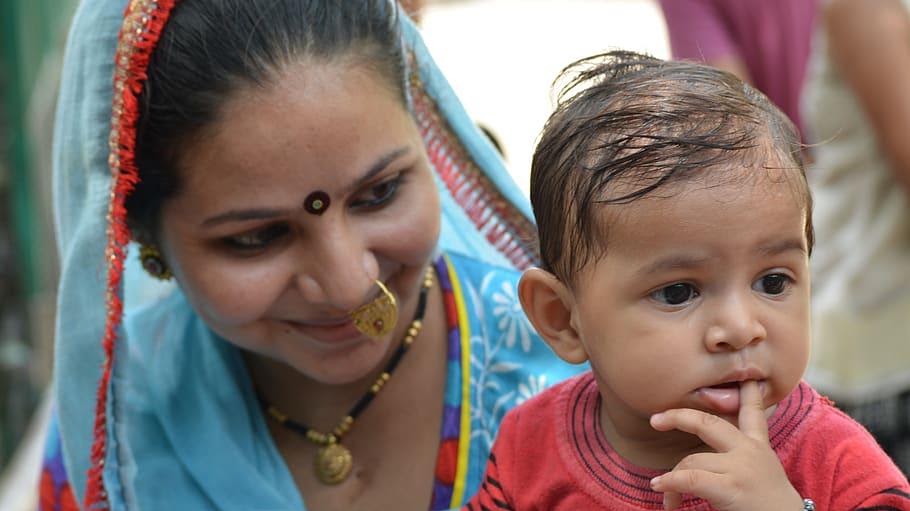
A woman holding a young child.

Push and Pull Factors for (Early) Marriage, Bangladesh Integrated Household Survey Questionnaire (BIHS)

Early marriage remains an important social and economic issue in many developing countries, affecting women’s education, health, and long-term economic opportunities. This project examines the social, economic, and household factors associated with marriage timing in Bangladesh using data from the Bangladesh Integrated Household Survey (BIHS).

UP Researchers: Akito Kamei
with Dr. Mary Arends-Kuenning, Dr. Abigail Stocker, and Farhana Kabir

Hands decorated for a wedding.

Journal Publications

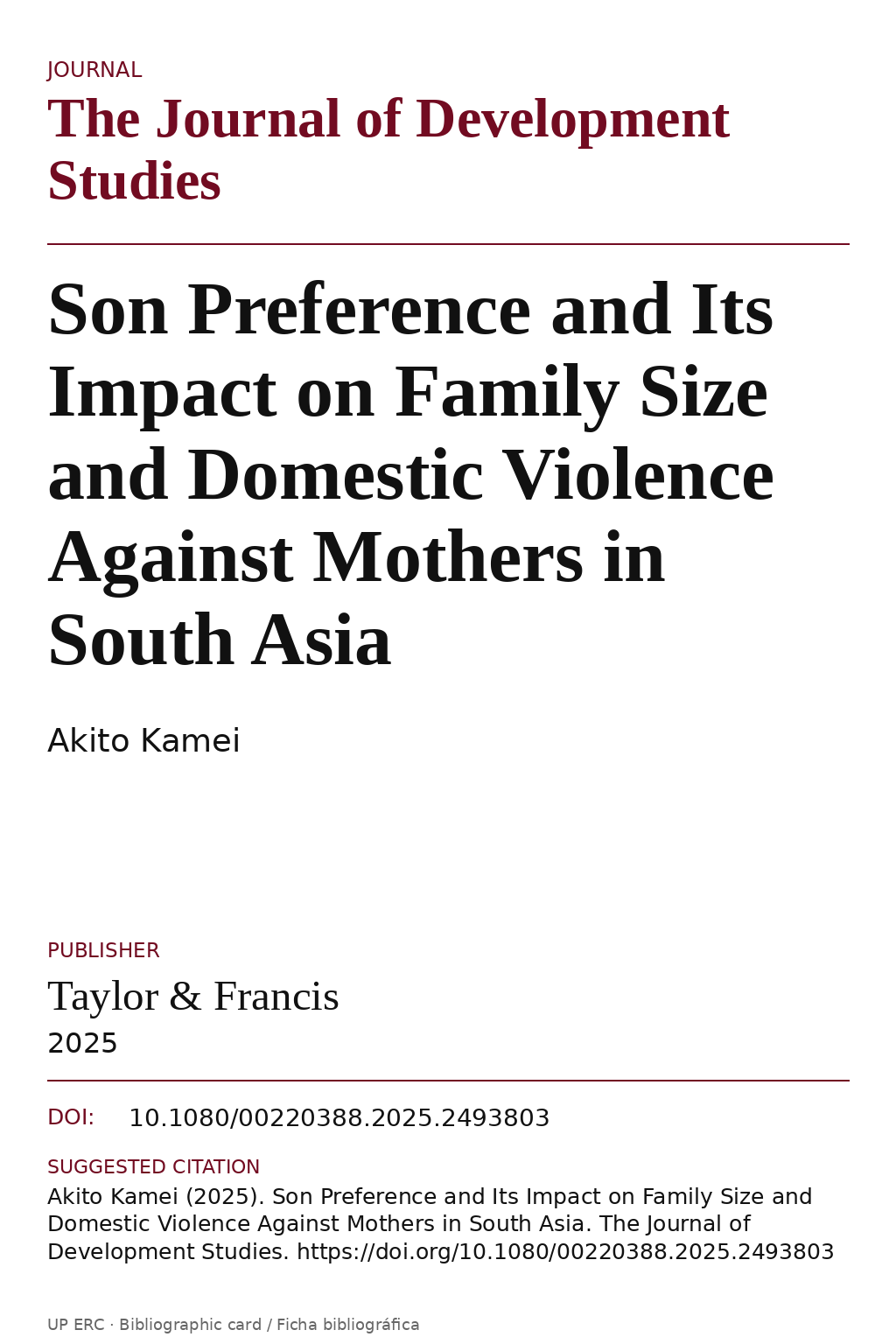
Using household surveys from India and Nepal, this study examines whether the sex composition of children is related to intimate partner violence in a region where many families prefer to have at least one son. The analysis compares women whose previous children have the same sex composition but who differ in the sex of a subsequent child. The sex of the first or second child is not associated with a change in the mother’s risk of violence. By contrast, having no son by the third birth is associated with a 9.6% increase in the violence index relative to having a son, with larger effects in less affluent households and where husbands have no education. Mediation analysis attributes around 40% of the increase in these groups to the decision to have another child. The findings connect son preference, fertility decisions, and women’s exposure to violence.

UP researcher: Akito Kamei

The Journal of Development Studies · 2025

Read paper ↗