


Research area

Education and Human Capital Investment

Gary Becker standing beside a chalkboard.

Education and human capital development are fundamental drivers of economic opportunity and long-term well-being, yet millions of children around the world continue to face barriers to quality learning. Learning poverty, limited access to educational resources, and unequal opportunities in early childhood and school-age education contribute to persistent inequalities in income and social mobility across generations.

This research agenda examines scalable interventions, institutional mechanisms, and public policy implications that can improve human capital accumulation. The research combines experimental and quasi-experimental methods with large-scale administrative and survey data to study how governments, schools, and households shape children’s developmental and educational trajectories across different stages of life.

Team

Current Projects

Scaling Digital Learning to Reduce Inequality: Evidence from a Randomized Trial in Mexico

As digital learning platforms expand rapidly across low- and middle-income countries, an important policy question is whether these technologies can improve learning outcomes at scale and reduce educational inequality. Using a teacher-level randomized controlled trial, this project evaluates Learning Passport, a digital learning platform developed by UNICEF and Microsoft and implemented in upper-secondary schools in Mexico.
UP Researcher: Akito Kamei

with Janina Cuevas Zúñiga (UNICEF Mexico), Marta Carnelli (UNICEF, Office of Research), and Thomas Dreesen (UNICEF, Office of Research)

Presentation at the Seminar on Development Economics at National Graduate Institute for Policy Studies (GRIPS) in 2026.

A person reading on a tablet.

Human Capital in Mexico: Does Being Late Have a Cost? Starting Age, Schooling Delay, and Returns to Education

This study examines whether the timing of education—not only the total years completed—affects long-term labor market outcomes in Mexico. The project explores whether students who progress through school later than the normative age face disadvantages in earnings later in life, highlighting educational timing as an important dimension of inequality and human capital development.

UP Researcher: José Miguel Montoya Morales

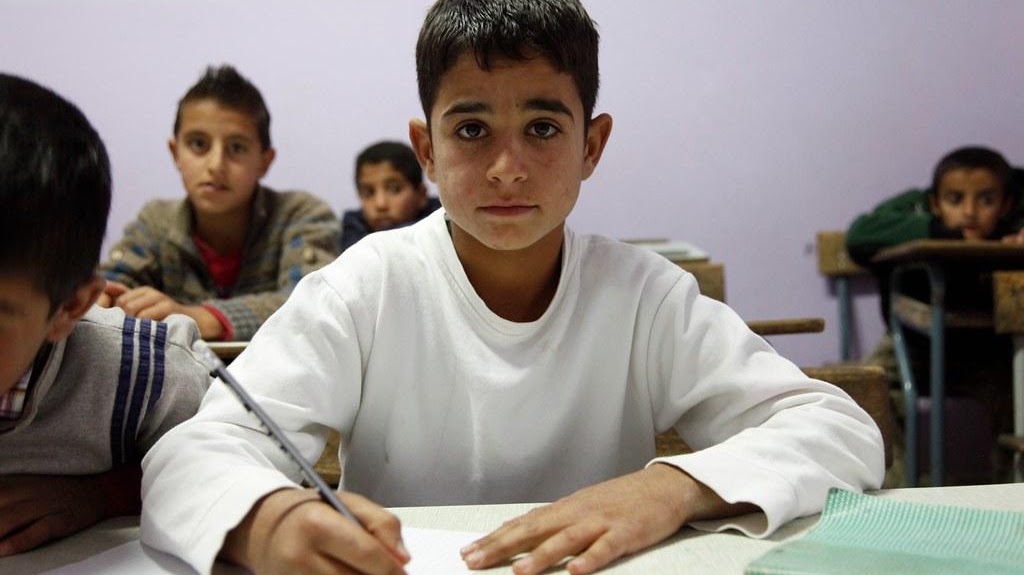
Students in a classroom.

Journal Publications

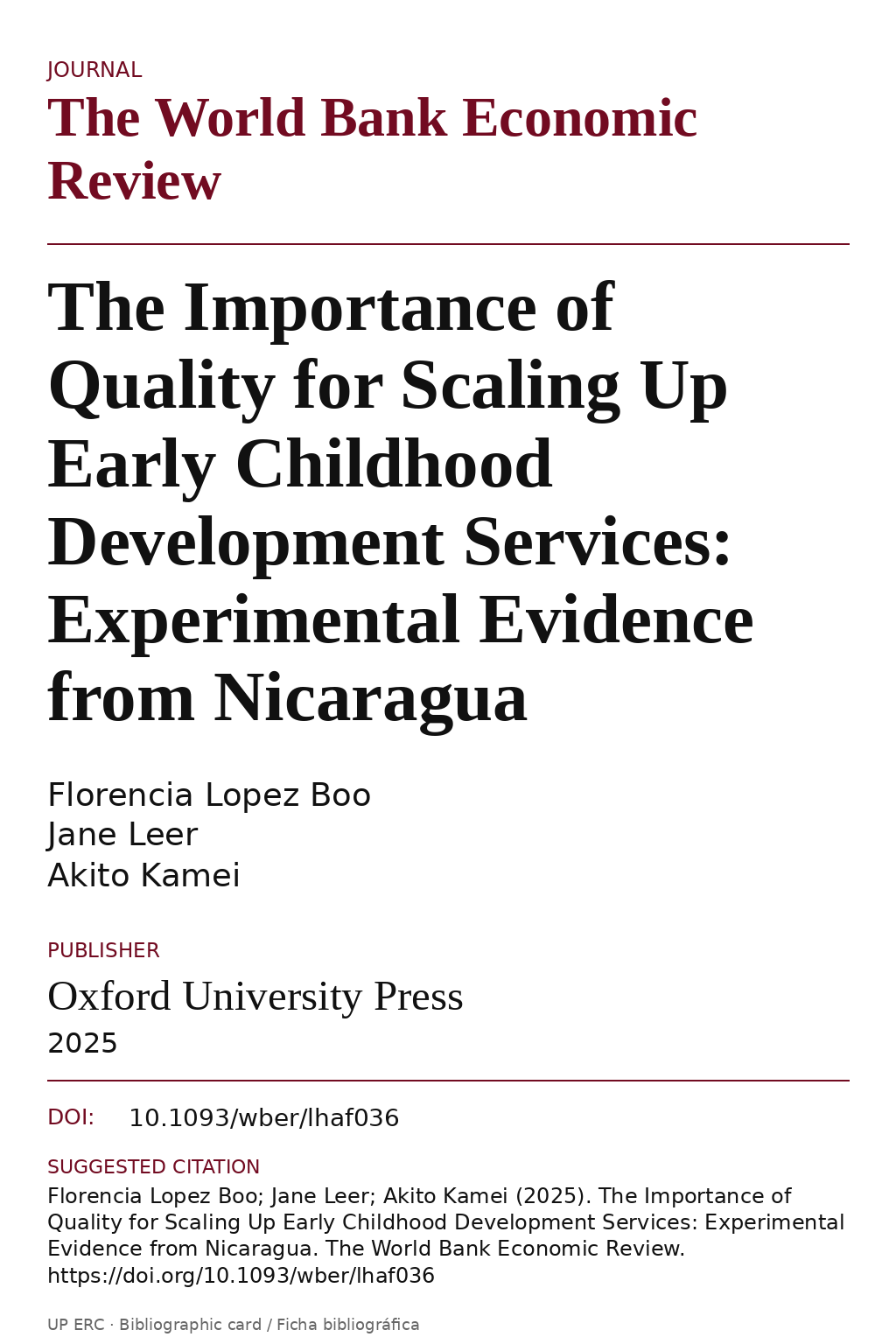
Can large-scale parenting programs improve children’s development when implemented by governments at scale? This study evaluates a nationwide Home Visit Program in Nicaragua and finds that regular home visits improved early childhood development, increased preschool completion, and strengthened parenting practices related to cognitive stimulation. Children assigned to the program experienced gains of 0.11 standard deviations in development outcomes, with even larger effects among households that actively participated.

Beyond measuring impacts, the study highlights the critical role of implementation quality. By experimentally comparing centralized monitoring with structured community-led monitoring, the research shows that community involvement significantly improved the quality of home visits and, in turn, child development outcomes. The findings provide important evidence that well-designed monitoring systems can help maintain quality when scaling up early childhood programs.

UP researcher: Akito Kamei
with Florencia Lopez Boo, Jane Leer

The World Bank Economic Review · 2025

Read paper ↗

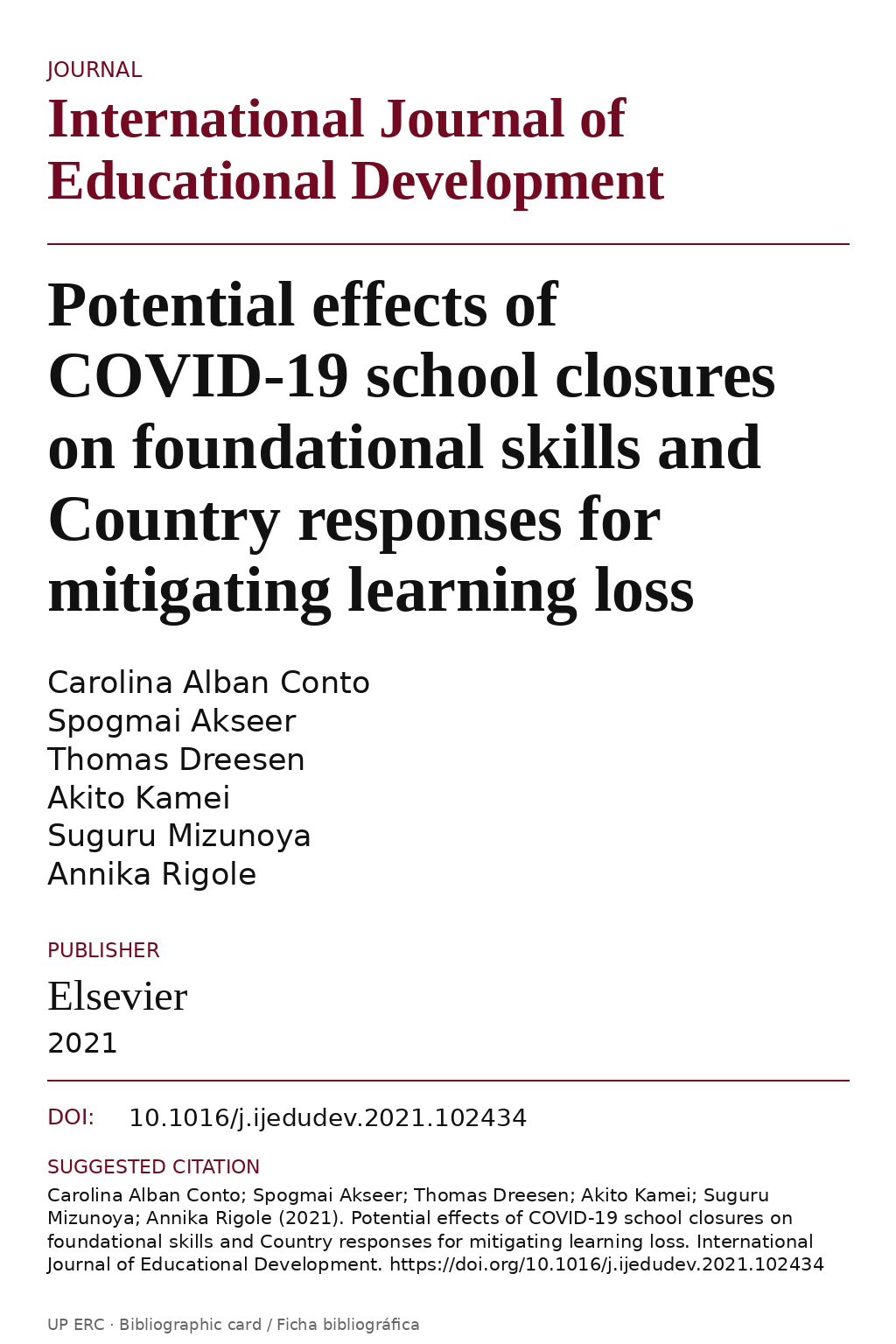
School closures during the COVID-19 pandemic disrupted learning for millions of children around the world, raising concerns about long-term effects on foundational skills such as reading and numeracy. This study examines how interrupted schooling and school dropout are associated with children’s learning outcomes in low- and lower-middle-income countries. Using household survey data from thirteen countries, the research explores the relationship between school participation and foundational learning, while also documenting how governments responded through remote learning policies during the pandemic.

The study highlights important challenges in ensuring that all children continue learning during periods of educational disruption. In many countries, remote learning responses faced limitations in reaching vulnerable populations, particularly younger children and marginalized households. The findings underscore the importance of inclusive and effective education policies to prevent widening learning inequalities during crises.

UP researcher: Akito Kamei
with Carolina Alban Conto, Spogmai Akseer, Thomas Dreesen, Suguru Mizunoya, Annika Rigole

International Journal of Educational Development · 2021

Read paper ↗