



Research area

Macroeconomics and Finance

The blue euro sculpture with yellow stars in Frankfurt.

Macroeconomics studies how economies grow, respond to crises, and create conditions for long-term prosperity. Government policies, financial systems, international trade, and political institutions all shape economic stability, productivity, and development opportunities. Understanding how economies react to shocks such as debt crises, inflation, or financial instability is important for designing policies that promote sustainable growth and protect household welfare.

This research agenda examines how macroeconomic institutions, sovereign risk, trade integration, and public policy influence economic development and long-term growth. Current projects explore topics such as sovereign default, productivity losses during financial crises, trade agreements, monetary institutions, and the broader relationship between macroeconomic stability and economic performance.

Team

Current Projects

Inflation Expectations and the Phillips Curve in Mexico

This project examines the credibility of inflation targeting in Mexico and how inflation expectations have evolved since the adoption of the inflation-targeting regime. Despite a long-standing inflation target of 3 percent, realized inflation has frequently deviated from this benchmark. The study investigates whether these deviations have affected the extent to which households and markets view the target as credible. By analyzing the relationship between inflation dynamics and expectations over time, the project aims to provide new evidence on the effectiveness of monetary policy and the anchoring of inflation expectations in Mexico.
UP Researchers: Juan Alvaro D. Kedilhac and Arnulfo Rodríguez Hernández

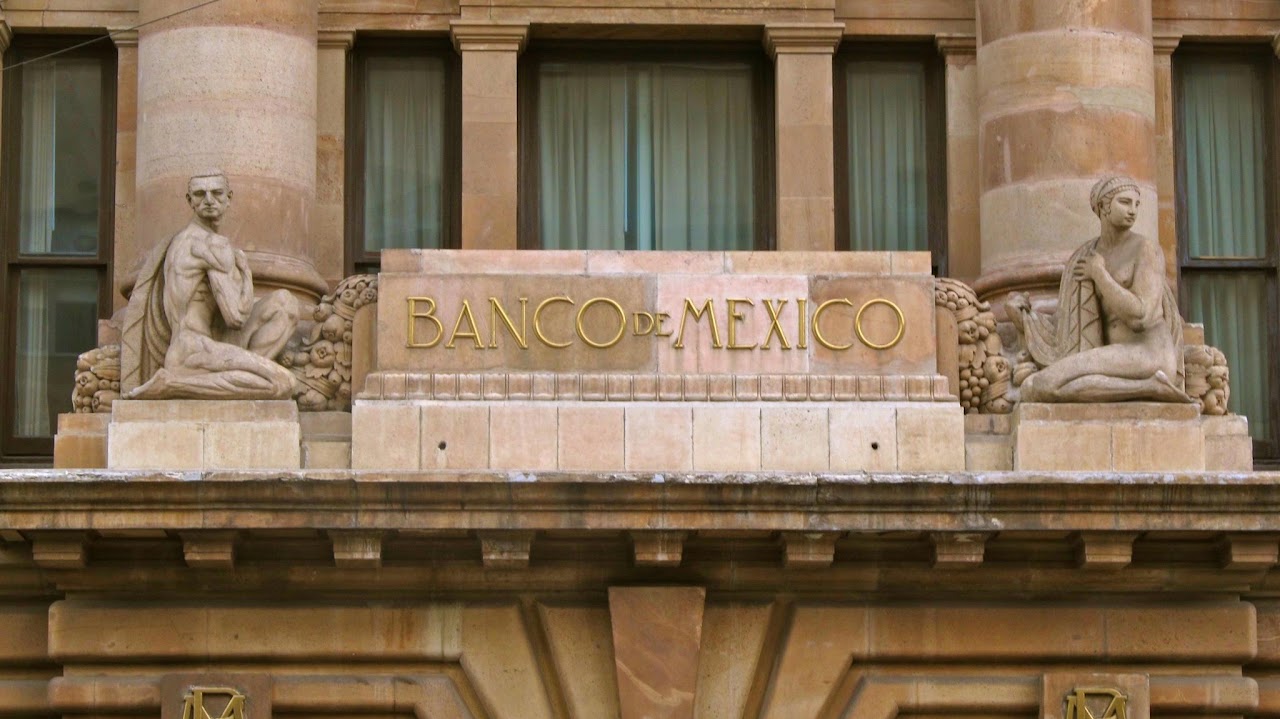
Historic Mexican bank building.

Journal Publications

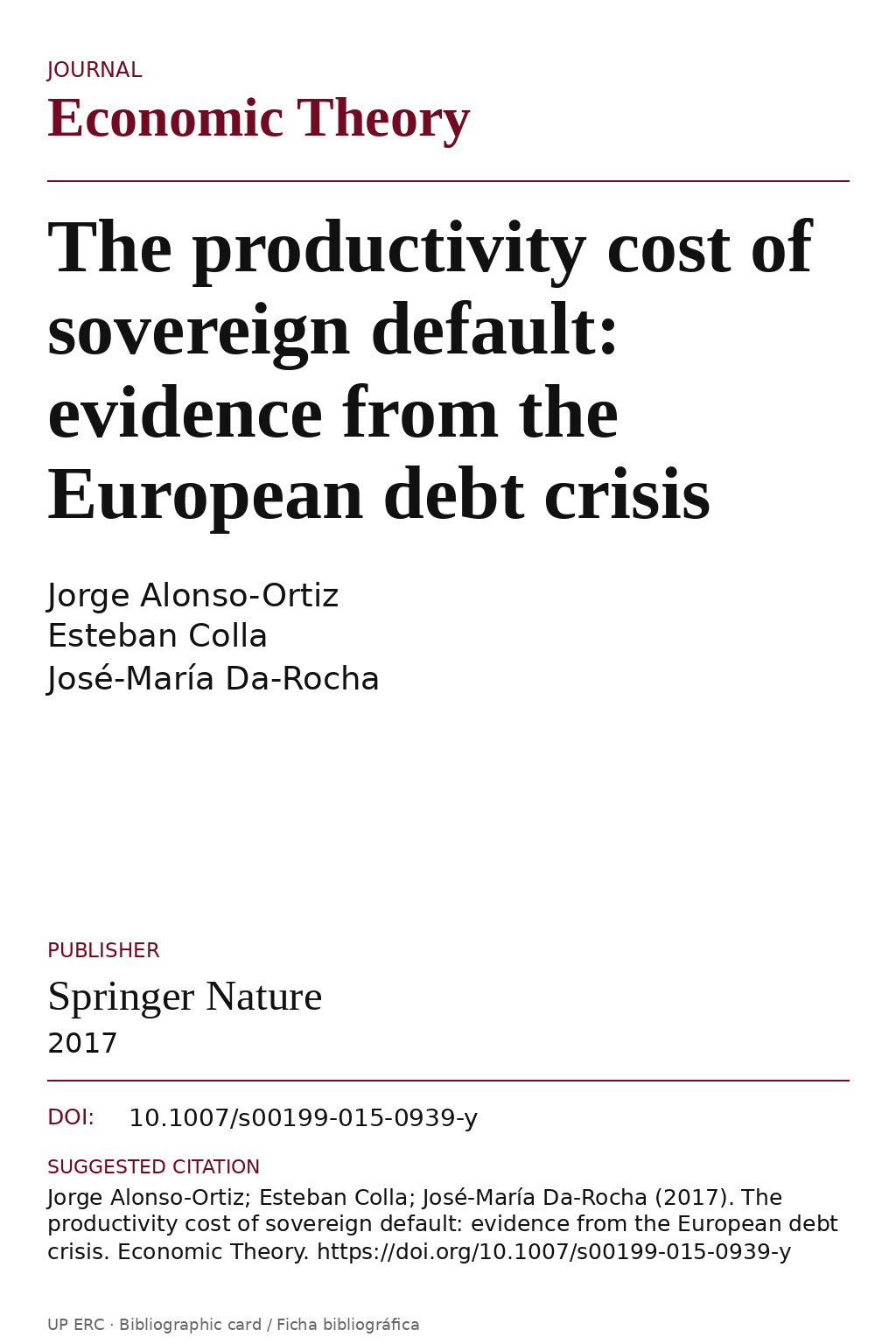
This paper studies how sovereign default can affect productivity and output, using a continuous-time model in which the government chooses whether to service its debt and default changes the future productivity process. The model is calibrated with financial-market information for ten European countries during 2009–2012, when stock prices and sovereign risk premiums moved inversely. For a pooled, representative country, the calibration implies that markets price in a 3.70% decline in total factor productivity; averaging country-specific estimates yields a 5.88% decline. The model predicts an output contraction of about 3.71% for a typical debt crisis. The authors use the framework to examine crisis dynamics, recovery, fiscal policy, and how default incentives vary with initial debt.

UP researcher: Esteban Colla
with Jorge Alonso-Ortiz, José-María Da-Rocha

Economic Theory · 2017

Read paper ↗

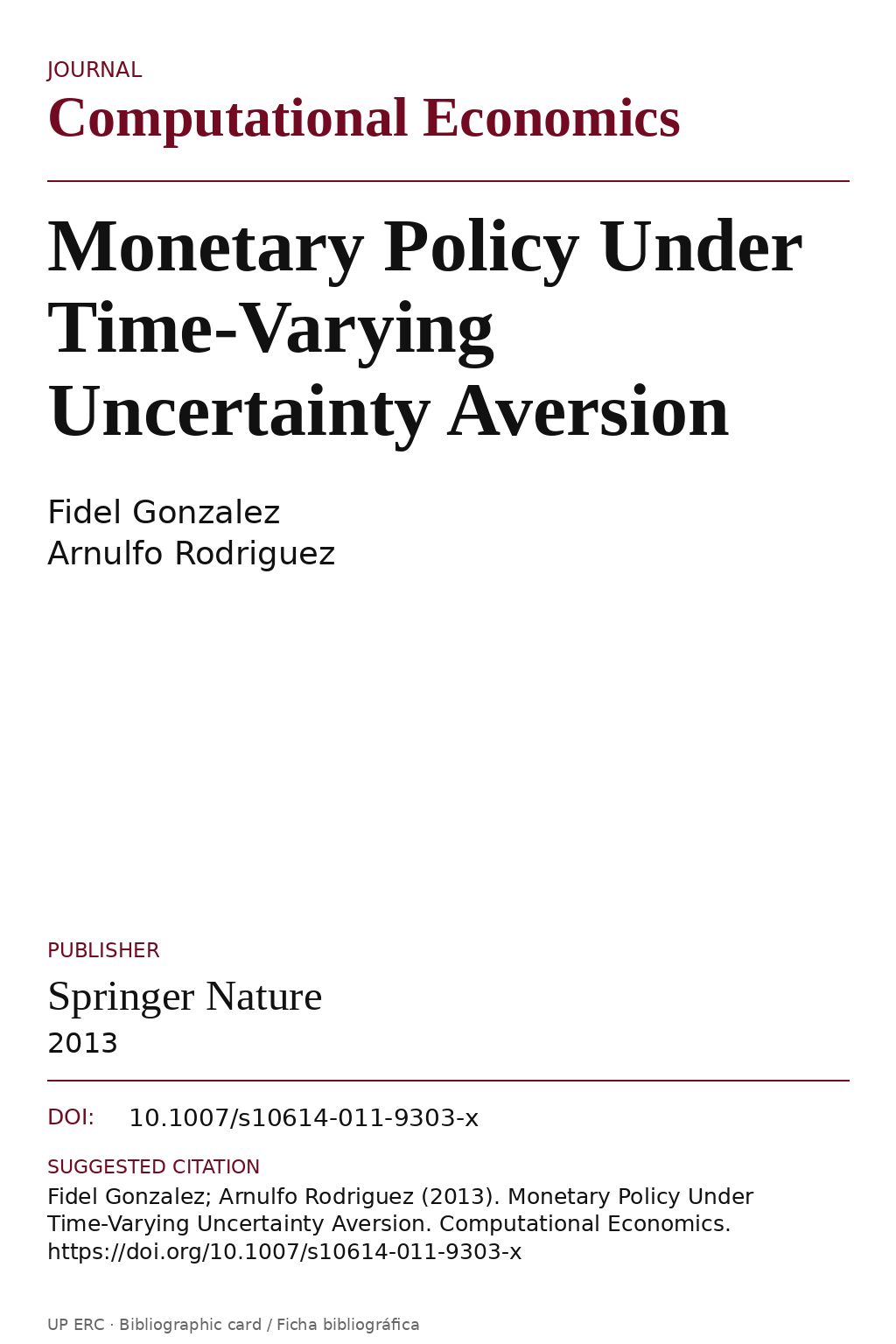
The authors develop a framework for optimal policy by an inflation-targeting central bank that is uncertain about its model and whose degree of mistrust changes as the economy’s structure changes. Structural breaks and price, output, or real-exchange-rate shocks can alter the perceived uncertainty. Robust control represents policymakers’ uncertainty aversion, while a Markov chain captures changes in that aversion over time. The analysis finds that a more aggressive interest-rate response is generally optimal when policymakers are more uncertainty-averse or when future uncertainty aversion is more likely. Greater uncertainty aversion also lowers policymakers’ welfare. The effects of the Markov transition probabilities on expected losses are ambiguous, showing that the timing and persistence of uncertainty can complicate monetary-policy decisions.

UP researcher: Arnulfo Rodriguez
with Fidel Gonzalez

Computational Economics · 2013

Read paper ↗